
US and Dutch teams often hit the same wall: hiring fast is hard, and “far-offshore” collaboration slows delivery. Brazil is a strong nearshore option because it combines real-time collaboration, a mature global services footprint, and a predictable working rhythm that fits both US and Netherlands teams.
In Kearney’s Global Services Location Index (2023), Brazil ranked in the Top 5, signaling competitiveness across factors that matter for global delivery. Combined with a dominant national time zone around UTC−3 (Brasília Time) and no daylight saving time in Brazil (clocks don’t change), Brazil makes it easier to run standups, pairing sessions, and feedback loops—especially for US teams and for Dutch teams in CET/CEST.
TL;DR
- Top 5 market signal: Brazil is in Kearney’s Top 5 (GSLI 2023).
- Nearshore overlap: Most of Brazil runs on UTC−3, supporting real-time collaboration.
- Stable calendars: Brazil has no DST, reducing “surprise” schedule shifts.
- NL-friendly window: In winter (CET), Amsterdam is typically 4 hours ahead of São Paulo (e.g., 13:00 in Amsterdam = 09:00 in São Paulo).
- Scale path matters: Start with 1 FTE, then scale to a dedicated team with the right engagement model.
Why Hire Brazilian Developers Brazil works?
Why Brazil works for US teams
Time-zone overlap that actually speeds up deliver
Brazil is split into four time zones, but the majority of the population—and most major tech hubs—operate on Brasília Time (UTC−3). That makes real-time collaboration much easier than far-offshore setups.
What this changes in practice: you can run daily standups, do quick pairing sessions, unblock issues fast, and keep a tighter feedback loop with product and QA—without turning everything into async handoffs.
How to use it well (simple playbook):
- Pick a consistent overlap window (e.g., 3–5 hours/day) and screen candidates for it.
- Use “fast feedback rituals”: short standups + quick PR reviews + a fixed daily sync slot.
Stable calendars (Brazil has no DST)
Brazil scrapped daylight saving time in 2019, and as of now it’s not observing DST—meaning fewer surprise shifts to recurring meetings.
(There have been periodic discussions about possibly bringing DST back during energy stress, so it’s worth confirming year by year when planning long-term schedules.)
Market maturity signal: Brazil is Top 5 in Kearney GSLI (2023)
For global delivery, Brazil isn’t a “new bet.” In Kearney’s Global Services Location Index (2023), Brazil is part of the Top 5—a strong indicator of market competitiveness for global services work.
So what for US teams: you’re more likely to find experienced engineers who’ve worked with international clients, and it’s generally easier to scale beyond a single hire.
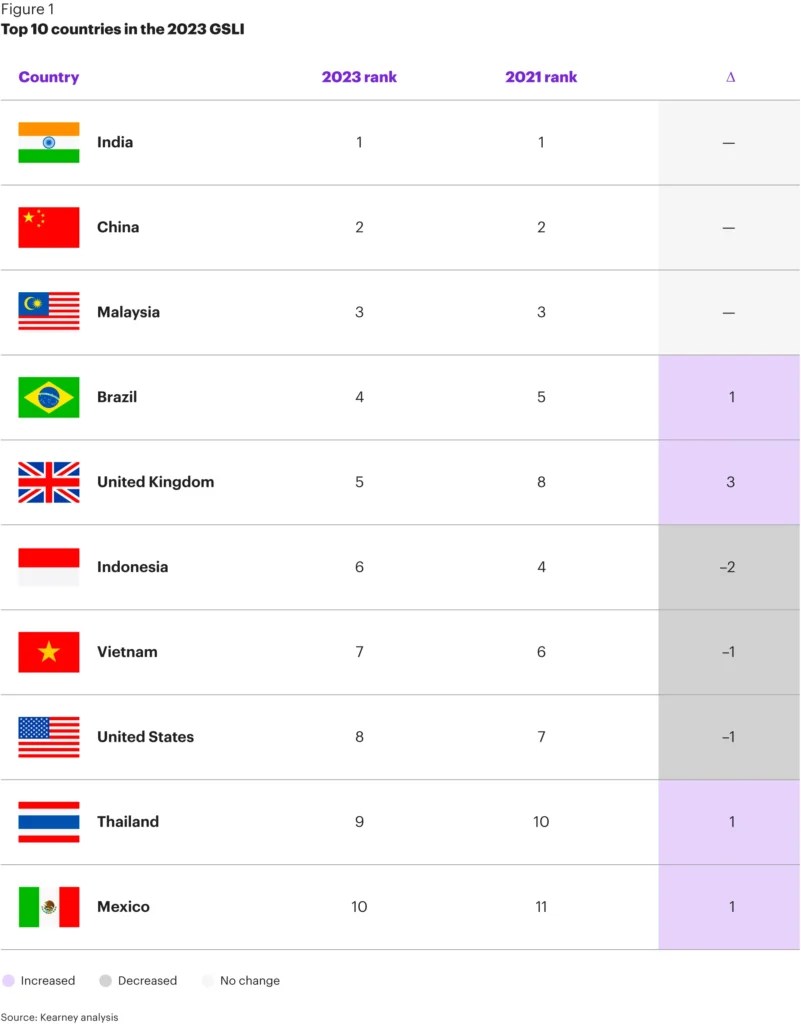
Source: Kearney’s Global Services Location Index (2023)
If you’re ready to explore roles and engagement options: Explore hire Brazilian developers (1 FTE → dedicated team).
Why Brazil also works for Dutch teams (CET/CEST planning)
The “golden overlap window” is very workable
In winter, Amsterdam runs on CET (UTC+1) while São Paulo is BRT (UTC−3), a typical 4-hour difference (Amsterdam ahead). You can see the live conversion between São Paulo and Amsterdam on Timeanddate.
Example (winter/CET):
- 15:00 Amsterdam → 11:00 São Paulo. This is a great window for planning ceremonies (standup, refinement, sprint planning).
Plan for Dutch DST (Brazil stays stable)
The Netherlands observes DST in 2026: it starts March 29, 2026 and ends October 25, 2026.
During Dutch summer time (CEST, UTC+2), the gap typically becomes 5 hours (Amsterdam ahead), because Brazil isn’t shifting clocks.
Example (summer/CEST): 15:00 Amsterdam → 10:00 São Paulo
A simple ceremony template for NL ↔ Brazil teams
- Daily standup: 15:00–16:00 Amsterdam (works year-round; just shifts 1 hour earlier in São Paulo during CEST)
Deep work blocks: keep mornings in Brazil and early mornings in NL async; reserve overlap window for decisions/reviews. - Weekly planning: schedule in the overlap window to keep attendance high without pushing Brazil too late.
Want to start with 1 FTE and scale later? See hiring models (staff aug, dedicated team, recruitment, EOR)
Market maturity: talent depth + global services footprint
Brazil isn’t an “experimental” market
If you’re deciding where to hire nearshore, maturity matters. In Kearney’s Global Services Location Index (2023), Brazil ranks in the Top 5 (with the UK rounding out the top group). Kearney positions the index as a way to compare countries’ attractiveness for global services delivery.
What that typically means for US & Dutch teams:
- A deeper hiring pool for common software roles (frontend, backend, QA, DevOps).
- More candidates with international collaboration exposure (tools, async habits, English usage).
- Better odds of scaling from 1 FTE → multiple roles → a dedicated team, without restarting sourcing every time.
What “Top 5” does not guarantee
A country ranking doesn’t guarantee every hire will be a fit. You still need a process that filters for:
- Communication quality (clear writing, feedback habits, stakeholder updates)
- Overlap discipline (shows up consistently in your agreed window)
- Delivery habits (PR hygiene, test discipline, ownership, accountability)
Avoid “good CV, wrong fit”: a practical screening scorecard

Use this checklist to screen Brazilian developers (or any nearshore market) in a way that reduces ramp-up risk:
Role match (must-haves)
- Can they demonstrate production experience in your core stack (not side projects only)?
- Do they show depth in what matters for the role (e.g., backend performance, frontend architecture, QA automation)?
Remote readiness
- Can they explain how they work day-to-day: planning, updates, blockers, ownership?
- Do they communicate clearly in writing (Slack/PR comments), not just in calls?
Overlap commitment
- Confirm the minimum overlap hours you need and ask for examples of past cross-time-zone routines.
- If overlap is tight, prioritize candidates who are strong at async documentation.
Delivery discipline
- Ask for a walkthrough of a recent feature: requirements → tradeoffs → implementation → testing → release.
- Look for habits like small PRs, clear commit messages, and reliable estimates.
Quality & testing mindset
- What’s their default approach to testing (unit/integration/e2e)?
- How do they prevent regressions when moving fast?
Security hygiene (lightweight but real)
- How do they handle secrets, access, and environments?
- Do they understand basic secure practices for day-to-day delivery (least privilege, secure storage, review habits)?
Risk-control checklist (don’t skip this)
Hiring nearshore is fastest when risk is handled upfront—especially around worker classification, IP, and security access. The goal isn’t to add bureaucracy; it’s to remove surprises that delay onboarding later.
Contractor vs employee: avoid misclassification risk
A common cross-border pitfall is treating someone like an employee (fixed hours, exclusivity, close supervision) while contracting them as an independent contractor. This “misclassification” can create tax, benefit, and legal exposure depending on the jurisdiction.
Low-friction rules of thumb (not legal advice):
- If you require set schedules, exclusive full-time work, provide equipment, or manage them like an internal employee, you may be increasing employee-like classification risk.
- If you need full-time commitment + long-term continuity, consider an employment route (direct employment or EOR) rather than a pure contractor setup.
When EOR is the cleanest option
An Employer of Record (EOR) is a third party that legally employs the worker on your behalf and typically handles core HR responsibilities like payroll, taxes, benefits, and compliance—while you direct the person’s day-to-day work. EORs are often used specifically to reduce international compliance risk and avoid contractor misclassification scenarios.
Use EOR when:
- You want to hire quickly without setting up a local entity
- You need a more employment-like setup (full-time, ongoing)
- You want clearer compliance ownership for payroll/benefits/admin
Put IP protection in writing (and keep it simple)
For product teams, IP risk usually comes from ambiguity, not bad intent. A basic checklist:
- NDA + confidentiality clauses
- Clear IP assignment / work-for-hire language for deliverables
Define ownership of code, documentation, and inventions created during the engagement (Your counsel should review templates for your jurisdiction and the hiring route.)
Access control: secure delivery without slowing down
Treat security like part of delivery hygiene:
- Use least-privilege access (give only what’s needed)
- Separate environments (dev/stage/prod), no shared credentials
- Enforce MFA and password manager usage
- Keep audit trails (repo access, deployment permissions, logs)
Data protection for US + Netherlands stakeholders
If your Dutch team is involved, you’ll likely be thinking in GDPR terms even when your customer base is global. Keep the operational approach lightweight:
- Avoid copying production data to local machines
- Use anonymized datasets for development where possible
- Ensure tooling and access policies match your internal standards (SSO, device policies, logging)
A quick decision guide
- Want to hire directly and you already know your legal route → Recruitment Service
- Want to hire fast with a compliant employment setup without a local entity → EOR
- Want short-term, flexible work → contractor may fit, but screen classification carefully
If you want help choosing the cleanest route (Recruitment vs Payroll vs EOR): “Start with 1 FTE, then scale—without compliance surprises.”
Why Sunbytes (Transform · Secure · Accelerate)

Sunbytes is a Netherlands-led, EU-minded technology partner. We help US and Dutch teams hire Brazilian developers with a delivery system that doesn’t stop at “staffing”—it’s designed to improve outcomes, reduce risk, and scale smoothly.
Transform – turn hiring into reliable delivery
Hiring only works if the team ramps fast and ships consistently. Sunbytes focuses on role clarity, structured onboarding, and working rhythms that fit your product cadence—so new hires integrate quickly and contribute without long “warm-up” periods.
Secure – security built into how work gets delivered
Security shouldn’t be an afterthought or a separate project that slows the team down. Sunbytes promotes secure-by-design delivery habits (access discipline, IP awareness, predictable processes) and can support additional security services when you need deeper assurance—so you reduce risk while maintaining velocity.
Accelerate – scale from 1 FTE to a dedicated team (your way)
Start with one role to validate fit, then scale into a dedicated team when the business case is proven. Sunbytes supports flexible engagement routes—staff augmentation, recruitment support, payroll services, or EOR—so you can move fast with fewer operational blockers and a clear path from pilot → scale.
Ready to start? Book a 15-min call to talk with our experts now.