A lot of NIS2 conversations start with policies. But many real incidents start somewhere else:
A vendor account that wasn’t offboarded.
A SaaS tool with “everyone is admin.”
A managed service provider that had too much access for too long.
That’s why NIS2 doesn’t treat supply chain risk as an “optional extra.” It puts it directly inside the risk-management measures in Article 21—specifically including security-related aspects of your relationships with direct suppliers or service providers.
This article is intentionally practical. No legal deep-dives, no “download this template.” Just a clear approach EU SMEs can use to build trust and stay defensible when customers (and regulators) ask: “How do you manage supplier risk?”
If you’re still unsure whether NIS2 applies to you, start here: check if NIS2 applies to your organisation.
TL;DR
- NIS2 expects you to address supplier risk as part of cybersecurity risk management.
- Start with “direct suppliers/service providers” first. Don’t try to map the entire universe.
- Your goal isn’t “perfect suppliers.” It’s repeatable checks + clear decisions + evidence.
- If buyer questionnaires are already slowing deals, build a response system: Vendor Security Questionnaires: How SMEs Respond Faster (Answer Pack)
- For the full NIS2 picture and priorities: NIS2 readiness checklist for EU SMEs.
What NIS2 is actually asking for
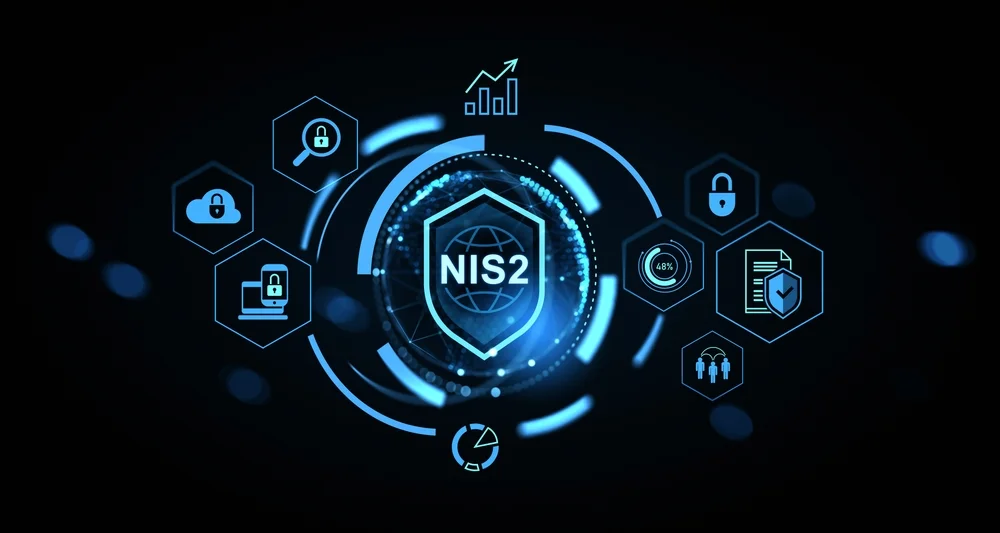
Article 21 includes supply chain security in the minimum set of risk-management measures, and it explicitly calls out the relationship with your direct suppliers or service providers. In normal language, that means:
You should be able to show that you know which suppliers matter, you check them in a reasonable way, and you don’t outsource your risk just because someone else runs part of your stack.
Also important: the directive nudges organisations to incorporate cybersecurity measures into contractual arrangements with direct suppliers and service providers (again: direct first).
This is a “trust mechanism,” not paperwork theatre.
“Direct suppliers” — the scope that won’t crush your team
Here’s the trap: SMEs read “supply chain security” and imagine a never-ending audit of every vendor they’ve ever paid.
That’s not the intent.
NIS2 points you first to direct suppliers/service providers—the ones you rely on to deliver your service or run your operations.
A simple way to define “direct” in your context:
- suppliers that touch your data, or
- suppliers that touch your systems, or
- suppliers that can interrupt your service delivery if they fail.
If a vendor doesn’t meet any of those, they’re usually not where you start.
The “Minimum Viable Supplier Risk” routine (SME-friendly, defensible)
You don’t need a heavyweight third-party risk program to be taken seriously. You need something repeatable.

Step A — Create a short “critical supplier list”
Aim for 10–20 max to start:
- cloud hosting / infrastructure
- identity provider / SSO
- managed IT / MSP / MSSP
- core SaaS that holds customer data
- key code dependencies if you’re shipping software
Step B — Classify suppliers by access and impact (2-minute scoring)
Use two questions:
- If this supplier is compromised, can it affect confidentiality/integrity/availability of our service?
- How much access do they have (data/system/admin)?
Put them into 3 buckets:
- Critical (high access + high impact)
- Important
- Low risk
Step C — Do “right-sized checks” per bucket
For Critical suppliers, you want a short set of signals:
- do they have security contacts + incident process?
- MFA/SSO support, access control practices
- backup/BCP posture where relevant
- vulnerability handling / patching posture
- proof or credible attestations where possible (not always a certificate)
For Important suppliers, fewer checks. For Low risk, document why they’re low risk and move on.
Step D — Decide, record, and review
The magic isn’t in the checklist. It’s in the decision trail:
- what you checked
- what you accepted
- what you mitigated
- what you’ll review again (e.g., annually or when something changes)
That “evidence trail” is what makes you credible later.
Contracts: keep it simple, keep it real
NIS2 highlights the value of building cybersecurity expectations into contractual arrangements with direct suppliers/service providers.
For SMEs, you don’t need 20 pages of clauses. Start with 4 practical expectations for Critical suppliers:
- breach/incident notification commitments (timelines + contacts)
- access controls (least privilege, MFA where feasible)
subprocessor/subcontractor transparency for sensitive data paths - right to receive evidence (not “right to audit everything” — just reasonable proof)
You’ll be surprised how much trust you earn by being clear and consistent, even if you’re not a giant enterprise.

Where this becomes real: buyer questionnaires and deal friction
Even if NIS2 doesn’t hit you directly, it often hits you through your customers.
When regulated buyers tighten supplier scrutiny, you’ll see it as:
- security questionnaires
- evidence requests
- “can you prove it?” follow-ups
That’s exactly why we recommend building a repeatable response system like an Answer Pack: a single internal source of truth with standard answers + evidence + safe exception statements.
If you’re already getting these requests, this is one of the fastest trust wins you can implement—without buying new tools.
Common mistakes we see (and the “better” version)
Mistake 1: Trying to assess every vendor
→ Better: Start with direct + critical
Mistake 2: Saying “we comply” without proof
→ Better: Show evidence, and be honest about gaps with a plan
Mistake 3: Treating supplier checks as a one-off
→ Better: Make it repeatable (annual + change-driven reviews)
Mistake 4: Leaving supplier risk in IT only
→ Better: Make it a business risk decision with clear ownership
Want supplier risk to feel manageable—not endless?
We don’t turn supplier risk into bureaucracy. We help you create a pragmatic, evidence-backed approach that matches your size, your sector, and your real delivery stack.
- Practical supplier risk routine aligned to Article 21 expectations
- Evidence-ready documentation that supports customer due diligence

• ISO 27001-minded delivery process • GDPR-aware by design • Experience supporting ISO 27001
About Sunbytes: Transform · Secure · Accelerate
Sunbytes is built around three pillars that strengthen each other:
- Transform: We modernise products and delivery—so growth doesn’t come with hidden fragility.
- Secure: We make cybersecurity practical and operational—so risk mnagement becomes part of how you deliver.
- Accelerate: We help organisations scale with the right people and systems—so speed doesn’t trade off against quality or compliance.
Together, these pillars help EU SMEs move beyond “we think we’re fine” to “we can demonstrate it”—especially when supplier risk becomes the shortest path to real incidents.
FAQs
It includes security-related aspects of your relationships with direct suppliers or service providers as part of your risk-management measures.
Not necessarily. A repeatable, proportionate approach focusing on direct critical suppliers, clear decisions, and evidence is often the strongest start.
As buyers become responsible for their own supplier risk, they’ll request proof from vendors. Having an Answer Pack improves speed and consistency.
NIS2 signals the value of incorporating cybersecurity measures into contractual arrangements with direct suppliers and service providers.
Let’s start with Sunbytes
Let us know your requirements for the team and we will contact you right away.