

Most companies treat succession planning as a task for the future. Something to revisit after the next expansion, after the team stabilizes.
The problem is that the moments when its impact matters most are precisely when there is no time left to create one. This article examines what succession planning actually protects, what it costs when absent, and how to evaluate whether your current approach is working.
TL;DR
- Companies without a succession plan spend 100-150% of annual salary to replace a single senior leader and still lose up to 12 months of leadership effectiveness (Center for American Progress (2009). The cost of employee turnover).
- Succession planning reduces leadership turnover by 25%, improves retention, and directly strengthens organizational performance at every level (Impact of Succession Planning Practices on Employee Performance).
- Measure it with three metrics: bench strength ratio, internal fill rate, and time-to-productivity for promoted leaders.
What happens when there is no Succession Plan
Understanding the importance of succession planning in an organization starts with what its absence costs. These are not hypothetical risks. They are patterns that repeat across industries whenever leadership transitions happen without preparation.
Leadership crisis and decision-making slowdown
When a key leader exits, and no successor is ready, decisions that previously took a day now wait for committee consensus. Projects stall, and teams that operated with clear direction suddenly operate on assumptions.
In 2024, more than 2,200 CEOs stepped down globally – a 16% increase year-on-year and the highest figure on record. Boards without a prepared process were left with search timelines of six to nine months. (Corporate Board Member, 2025)
When leadership gaps are not planned for, decision-making slows down, reducing revenue execution speed. At the same time, visible uncertainty weakens client and partner confidence, while internal instability signals quickly spread across teams and even to investors within weeks.
Hidden costs: emergency external hiring, knowledge loss, culture disruption
External hires are paid 18-20% more than internal promotions on average, yet receive lower performance evaluations for at least their first two years in the role. (Wharton, Matthew Bidwell)
Beyond salary premiums, organizations also face loss of institutional knowledge, such as client relationships and strategic context. New hires require onboarding periods that can last 6-12 months in technical or compliance-heavy roles, while unplanned transitions often disrupt culture and signal unclear career paths to existing employees.
Compliance and legal exposure during unplanned transitions
Rapid role-filling creates specific compliance risks. Contractors may be asked to perform work that legally requires an employee.
In Vietnam, ad hoc workforce decisions during leadership transitions create worker misclassification risk. Social insurance obligations, fixed-term contract rules, and severance requirements apply regardless of the circumstances of the transition.
Succession planning vs. replacement planning: goals and key differences
Many organizations believe they have a succession plan when they actually have a replacement list. The distinction matters because they produce entirely different outcomes.
The best practices in succession planning combine contingency names for emergencies with a structured development pipeline for roles that matter most to business continuity.
| Factor | Replacement Planning | Succession Planning |
|---|---|---|
| Time horizon | Immediate | 12-36 months ahead |
| Trigger | Vacancy occurs | Ongoing process |
| Focus | Names on a list | Development of capabilities |
| Outcome | Role filled reactively | Pipeline of prepared leaders |
| Employee involvement | Usually confidential | Often includes the individual |
| Linked to strategy | Rarely | By design |
Impact on Business Continuity and Leadership Stability
Without a structured succession plan, even a short-term leadership gap can create ripple effects across decision-making, team performance, and business outcomes.
The cost of an unplanned leadership vacancy
SHRM estimates replacing a mid-level employee costs 100-150% of annual salary. For senior and executive roles, that figure rises considerably once executive search fees, interim management, and productivity ramp-up are included.
How succession planning reduces operational disruption
When potential successors are actively developed, they gain cross-functional exposure, client context, and strategic visibility before they need to apply any of it.
Organizations with a well-executed succession process have a 31% higher employee retention rate. 75% of companies with succession plans report smoother leadership transitions.
When successors are prepared in advance, they already understand the business context, making knowledge transfer structured instead of reactive. This ensures teams maintain stability and trust during transitions, rather than experiencing disruption.

Real-world examples: Microsoft, Costco, and the cost of poor transitions
Microsoft’s transition from Steve Ballmer to Satya Nadella followed a structured internal assessment process. It marked the beginning of consistent growth and market recovery.
Costco has built its entire model around internal promotion. Every senior leader has come through the organization and been explicitly mentored for advancement. The result is exceptional management stability and consistent operating performance.
These outcomes are the direct result of deliberate strategic workforce planning sustained over years, not a response to a vacancy.
Impact on employee retention, engagement, and performance
The link between succession planning and employee retention is one of the most direct talent levers available, yet one of the most underused.
Why High-Potential Employees Leave Without a Visible Career Path
While only a third of recent graduates intended to stay in their current role for four or more years, twice as many would stay if given continual access to skill-building and advancement opportunities.
High-potential employees expect a visible career path that does not depend on waiting for vacancies, clear signals that the company invests in their development, and transparent criteria on what performance is required to grow and be rewarded.
Succession Planning as a Retention Signal
Being included in succession discussions, given stretch assignments, or enrolled in leadership development programs are powerful retention signals.
Companies with strong succession programs reduce leadership turnover by 25%. Organizations with effective programs are 2.5 times more likely to succeed in their talent management efforts overall.
To structure the career conversations that reinforce this signal, an OKR planning guide offers a practical framework for linking individual development goals directly to business outcomes.
Internal Promotions vs. External Hires
The performance data on internal versus external hires is consistent across multiple studies. External hires cost more, take longer to reach full productivity, and receive lower ratings during their first two years.
For companies in Vietnam:
The Sunbytes Employer of Record (EOR) model provides a compliant employment structure that supports long-term talent development, reducing dependence on expensive external replacement cycles when senior roles turn over.
How to evaluate the impact of your Succession Plan

Tracking succession planning ROI requires moving from qualitative to quantitative. A program that exists but is never measured is a program that exists only on paper.
Key Succession Planning Metrics to Track
The succession planning impact on organizational performance becomes measurable when you track the right combination of readiness signals and outcome data.
| Metric | What It Measures | Target Benchmark |
|---|---|---|
| Internal fill rate | % of critical roles filled from internal pipeline | Above 70% for senior roles |
| Bench strength ratio | Successors identified per critical role | At least 2 per role |
| Time-to-productivity | Time for promoted leader to reach full effectiveness | Shorter than external hire avg. |
| Successor retention rate | % of succession nominees still at company after 12 months | Above 85% |
| Engagement score of HiPos | Engagement of high-potential employees | Above company average |
Bench Strength Ratio and Internal Fill Rate
Industry best practices suggest identifying at least two potential successors for each critical role, with one ready within 12 months and another on a longer-term development path. This approach helps ensure continuity while building a sustainable leadership pipeline.
Warning signs to watch for:
- High bench strength ratio with low internal fill rate: plans exist but are not being activated
- External hiring remains the default even when internal candidates are ready
- Succession nominees are leaving the organization within 12 months of being identified
Using OKRs to Align Succession Outcomes With Business Goals
Succession planning stays strategic when linked to business objectives through a structured goal framework.
Example key results from Synergita OKR:
- Conduct weekly syncs with hiring managers to track successor readiness
- Build and maintain a talent pool database for recurring critical roles
Succession Planning impact for companies hiring and growing in Vietnam
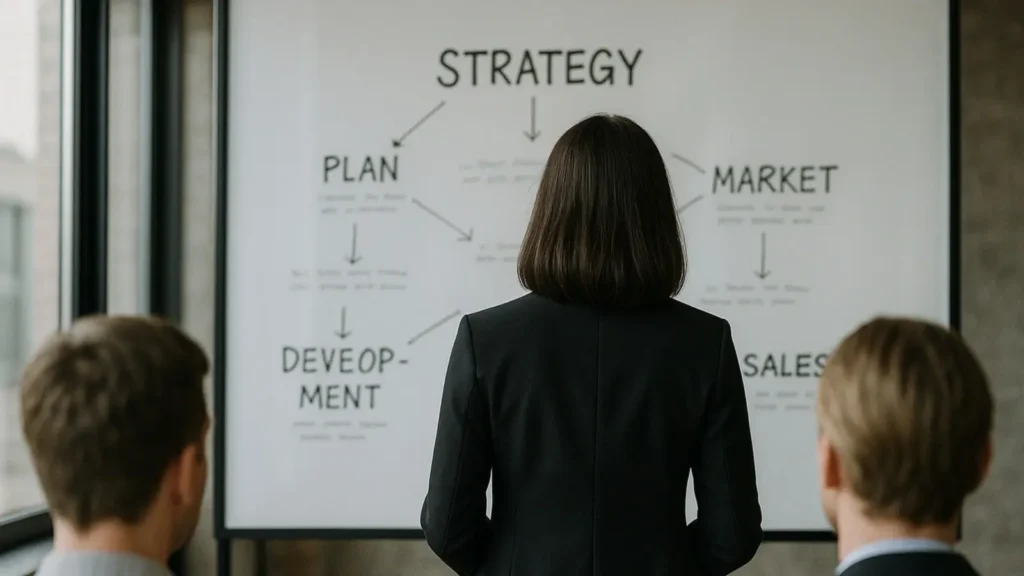
When a senior manager with deep local knowledge exits unexpectedly, the impact is compounded by the difficulty of finding a replacement who understands both business context and local regulatory requirements.
Why talent gaps compound faster in Vietnam:
- Specialized leadership talent remains constrained in Vietnam’s professional market
- Senior role recruiting takes time in standard functions, longer for technical or compliance roles
- Cross-border knowledge gaps take months to close, even with a strong external hire
- Local regulatory knowledge – labor law, SHUI, PIT – is not transferable from other markets
Building a sustainable leadership pipeline:
For companies at the growth stage not yet ready to establish a legal entity, Sunbytes hiring in Vietnam through an EOR provides the compliant employment foundation needed to invest in succession and leadership development without full entity setup overhead.
How Sunbytes helps International Companies build leadership continuity in Vietnam
Sunbytes helps international companies build, retain, and develop high-performing teams in Vietnam with compliant employment structures. From Employer of Record(EOR) arrangements to payroll management and workforce planning support, we provide the operational foundation that succession planning requires.
With 15+ years of experience and 300+ projects across 20+ countries, Sunbytes understands the talent dynamics of Vietnam’s professional market and the compliance requirements that international companies must navigate when building long-term teams.
Why Sunbytes?
With over 15 years of experience supporting international businesses, Sunbytes brings a structured approach to scaling teams while maintaining compliance, operational control, and long-term sustainability.
Our capabilities are built around three core service pillars:
- Digital Transformation Solutions – Supporting end-to-end product development and scalable engineering teams, with a deep understanding of how high-performing teams are designed and operated
- Cyber Security Solutions – Embedding a security-first approach to ensure growing teams maintain strong governance, compliance, and data protection standards
- Accelerate Workforce Solutions – Enabling companies to build and retain high-performing teams in Vietnam through Employer of Record, payroll services, and structured hiring aligned with business needs
FAQs
Typically 12-24 months. Most outcomes, such as improved internal fill rates and faster time-to-productivity, appear over time. Retention improvements can be seen earlier, within 6-12 months, when high-potential employees are actively developed.
No. The impact is often greater in smaller organizations, where the loss of a key role can disrupt operations more significantly. Even a focused plan for a few critical positions can reduce risk.
It is a subset of talent management. Talent management covers the full employee lifecycle, while succession planning focuses specifically on preparing successors for critical roles to ensure continuity.
Higher cost and greater transition risk. External hires take longer to ramp up, may not align with internal culture, and lack institutional knowledge. Over time, this weakens continuity and reduces retention.
Let’s start with Sunbytes
Let us know your requirements for the team and we will contact you right away.


