
Dutch companies that outsource app development to Vietnam are not only choosing a lower-cost destination; they are also selecting one that offers a skilled workforce. They are choosing a specific delivery structure: senior engineering talent, Dutch-managed communication, GDPR-aware contracting, and a workable overlap between Amsterdam and Ho Chi Minh City for sprint ceremonies.
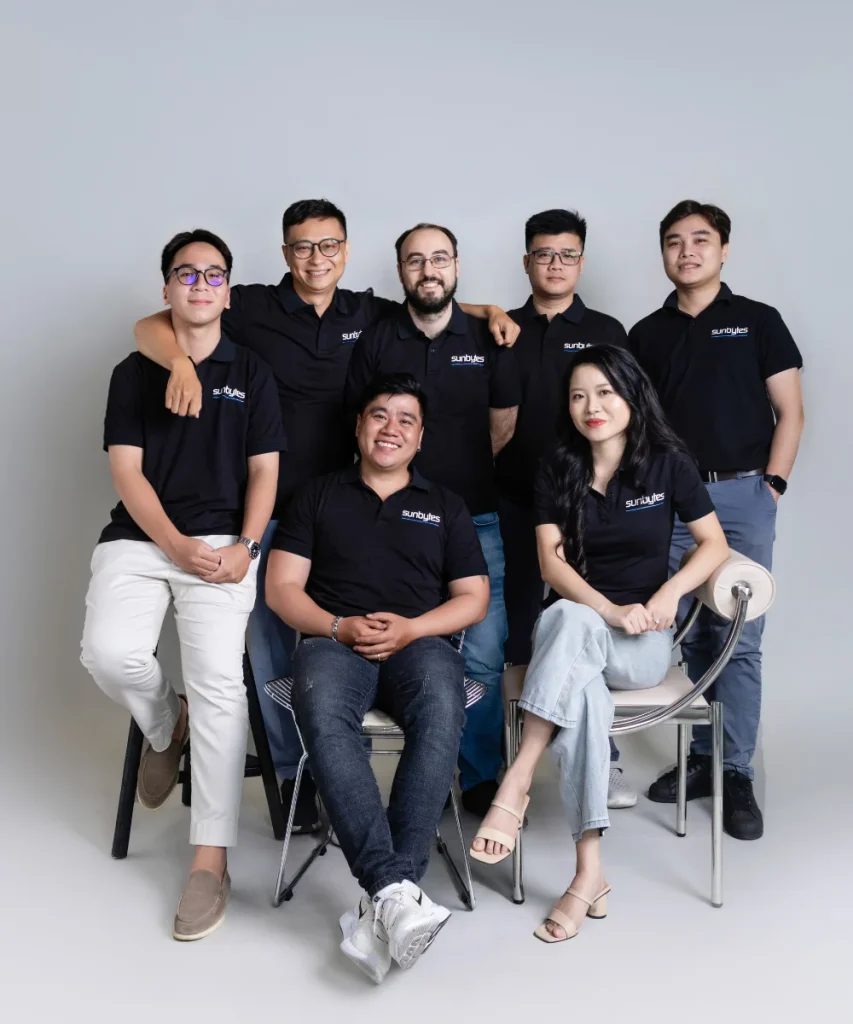
At Sunbytes, the NL-VN model is built around that structure: Utrecht-based accountability, a Ho Chi Minh City delivery hub, Dutch-speaking account management, and dedicated app development teams that can be set up in 2–4 weeks. The question is not whether Vietnamese developers are capable. The question is whether the engagement model protects quality, communication, and compliance for a Dutch company.
TL;DR
- Cost matters, but it is not the real reason Dutch companies choose Vietnam. The stronger reason is access to senior app development capacity without losing delivery control.
- The NL-VN model works when there is Dutch-side ownership, clear sprint rituals, senior technical oversight, and documented escalation.
- Vietnam is not on the EU adequacy list, so Dutch companies should expect SCCs, an Article 28 DPA, and clear GDPR handling before work starts.
- A serious Vietnam partner should be able to explain team setup, code review, timezone overlap, security standards, and escalation before the contract is signed.
- For a broader planning baseline, see our full guide to mobile application development.
The real reason Dutch companies work with Vietnamese developers
The cheap-offshore story is too small for how Dutch companies actually evaluate app development partners.
A lower hourly rate can help the budget, but it does not create a working product by itself. What matters is whether the team can retain product context across sprints, make architecture decisions visible, and continue improving the app after launch. A cheaper team that needs constant correction is not cheaper. Rework can add 30–40% to the original estimate before the product is ready to ship.
For Dutch CTOs and product leaders, the real cost equation is usually this:
- how fast the team becomes productive;
- how much context is retained between sprints;
- how much friction appears when priorities change;
- whether the same people maintain what they built after release.
That is why the dedicated team model matters. A project-based vendor often delivers against a fixed scope and leaves. A dedicated team stays close to the product, learns the codebase, and absorbs roadmap changes without turning every adjustment into a new commercial negotiation.
The reason the NL-VN model works for Dutch companies is not “Vietnam alone.” It is the combination of Dutch-speaking account ownership, Utrecht-based accountability, and Ho Chi Minh City engineering capacity. That structure is the difference between outsourcing as a staffing shortcut and outsourcing as a delivery system.
Why Vietnam specifically and why it matters for Dutch companies

Vietnam is a serious option for Dutch app development teams because the operating conditions fit product delivery: strong engineering supply, workable timezone overlap, and growing experience with European clients.
Timezone overlap works for sprint delivery
Ho Chi Minh City runs on UTC+7. Amsterdam runs on UTC+2 in summer and UTC+1 in winter, creating a 5–6 hour time difference depending on the season. In practice, a 9:00 AM Amsterdam standup is 2:00–3:00 PM in Ho Chi Minh City, which is still normal business time for both sides.
That overlap is enough for standups, sprint planning, backlog clarification, and escalation. It does not remove the need for documentation. It makes documentation more useful because both teams still have a shared daily window to resolve decisions.
Vietnam has a deep app development talent base
Vietnam produces roughly 50,000–57,000 annual students in computer science and IT-related majors, according to TopDev’s Vietnam IT market reporting. Ho Chi Minh City has a dense delivery market around mobile and web frameworks such as React Native, Flutter, Node.js, Java, and cloud-based product development.
For Dutch companies, the key point is not talent volume alone. It is whether the vendor can recruit senior engineers who already know how to work in sprint-based, documentation-heavy, international environments.
English is workable when the vendor hires for it
English is the working language for many senior technology roles in Vietnam, especially in teams serving European clients. Written English in Jira, Confluence, pull requests, and sprint documentation is often stronger than spoken English in live meetings.
That distinction matters. A serious vendor should not simply say “our developers speak English.” They should show how communication works: who joins standups, who writes delivery notes, who escalates blockers, and who translates Dutch business context into technical priorities.
GDPR and EU data transfer cannot be assumed
Vietnam is not listed by the European Commission as a country with an adequacy decision under GDPR Article 45. For Dutch companies transferring personal data to a Vietnamese partner, the vendor must support a valid GDPR Chapter V transfer mechanism. In practice, Standard Contractual Clauses under Article 46 are the mechanism most Dutch buyers should expect to discuss.
A vendor that does not raise SCCs, an Article 28 DPA, access control, and data processing scope during the commercial conversation is not ready for Dutch app development work.
For cost context, see our Vietnam development costs vs quality breakdown.
The objections Dutch CTOs raise and what experience says about them
Dutch buyers usually do not doubt that Vietnam has capable developers. They doubt whether the working model can protect the product when the team is 9,000 km away. That is the right concern.
“How do I know the quality will be consistent?”
Quality is a function of process, not geography. A vendor with no code review process, no definition of done, and no senior oversight will produce inconsistent output whether the team sits in Amsterdam or Ho Chi Minh City.
At Sunbytes, every engagement is structured around senior technical ownership, sprint ceremonies, code review, and documented delivery standards. Code review should not be an optional “extra.” It should be part of the definition of done.
“What happens when something goes wrong at 5 PM Amsterdam time?”
This is a fair question. The timezone overlap covers the Dutch morning well, but it does not automatically cover end-of-day Amsterdam incidents. For P1 issues, the real answer is not “we are always available.” The real answer is whether the SLA defines escalation, ownership, and async handoff.
Sunbytes’ model gives Dutch clients NL-side account management and a defined escalation route. For app development projects with production responsibility, P1 incident handling should be agreed before the team starts.
“Will they understand GDPR, AVG, and sector-specific rules?”
This is where Vietnam-generic vendors often fail Dutch clients. GDPR awareness varies across vendors. A team that has never worked with Dutch or EU clients should not be assumed to understand AVG expectations, data minimisation, consent handling, or sector-specific constraints.
Sunbytes works with Dutch and EU clients under GDPR-aware delivery practices. For relevant projects, the contract should include an Article 28 DPA, SCCs where personal data is transferred, and clear access control rules from onboarding. ISO 27001 should be verified by certificate number and expiry date, not accepted as a logo on a website.
“Can we really build a productive working relationship with a team we’ve never met?”
Yes, but only when the structure supports it. Dutch business culture values directness, clear ownership, and agreements that are written down. Those expectations can work well with a Vietnamese delivery team when communication rules are explicit.
Sunbytes supports this through Dutch-speaking account management, structured sprint reviews, retrospectives, documented escalation, and early check-ins with the Dutch account lead. The goal is not to make the offshore team feel local. The goal is to make ownership visible enough that distance does not create hidden risk.
“We tried outsourcing before and it didn’t work.”
Most outsourcing failures are structural, not geographic. The project was fixed-scope when the product needed iteration. The specification was too thin. The vendor delivered code but did not retain product context. Communication happened informally, so small issues became sprint-level delays.
Sunbytes’ model is built around a dedicated team engagement model. The same engineers stay close to the product across sprints, retain codebase knowledge, and support roadmap changes without restarting the relationship each time the scope changes.
What the NL-VN model looks like in practice

Sunbytes Structure
Our structure combines Utrecht-based management with a Ho Chi Minh City delivery hub. For Dutch companies, that means commercial accountability sits close to the client, while engineering capacity is built through senior teams in Vietnam.
The core of the model is Transform: dedicated app development teams that design, build, iterate, and maintain the product across sprints. But delivery only works when the people layer and the security layer are built into the engagement from the start.
That is where Sunbytes’ cross-pillar model matters:
- Digital Transform Solutions provides the app development structure: senior engineering teams, sprint delivery, architecture ownership, code review, and delivery governance.
- Cybersecurity Solutions supports the control layer: ISO 27001-guided delivery, access control, GDPR-aware data handling, DPA/DPIA readiness, and security practices that reduce risk while development moves forward.
- Accelerate Workforce Solutions supports the people layer behind delivery: the right team setup, compliant workforce operations, onboarding, and continuity so engineers can focus on shipping instead of admin friction.
A typical Sunbytes app development setup includes:
- dedicated senior app development teams built in 2–4 weeks;
- Dutch-speaking account management throughout the engagement;
- ISO 27001-guided delivery practices;
- GDPR-aware contracting, including Article 28 DPA and SCCs where applicable;
- sprint ceremonies, code review, and documented delivery standards;
- experience across 300+ projects and 14+ years of delivery;
- app development work across fintech, healthcare, and enterprise software.
This is why the model is not “hire developers in Vietnam and hope communication works.” The working model is designed before the team starts: who owns architecture, who escalates risk, which Amsterdam hours are covered, how code is reviewed, how access is controlled, and how delivery health is measured.
Curious what a Sunbytes dedicated app development team looks like for your project? Book a 30-minute architecture call with our team.
What to look for – 7 signals that distinguish a serious Vietnam partner
- NL-side account ownership
There should be a named Dutch-speaking contact accountable for the engagement. Ask who your escalation contact is in the Netherlands, not only who manages delivery in Vietnam. - GDPR Article 28 DPA offered unprompted
A vendor ready for Dutch clients should raise data processing terms early. If GDPR only appears after your legal team asks, the vendor may not be calibrated for EU delivery. - ISO 27001 certification or documented security roadmap
ISO 27001 is not mandatory for every vendor, but it is a strong signal of security maturity. Ask for the certificate number, expiry date, and scope. - Named senior engineer from day one
Before the contract starts, ask who will lead architecture decisions. If the answer is “we will assign someone later,” the seniority level is not clear enough. - Standard Contractual Clauses included where personal data transfer applies
Vietnam is not covered by an EU adequacy decision. If personal data is transferred, your vendor should be ready to discuss SCCs under GDPR Article 46 and the related transfer assessment. - Overlap window specified in the SLA
“We work across time zones” is not enough. The contract should name which Amsterdam hours are covered for real-time collaboration and how urgent issues are escalated outside that window. - Track record with Dutch or EU clients
Do not settle for “European experience” as a vague claim. Ask for experience with clients operating under GDPR, AVG, EU procurement expectations, and regulated delivery environments.
Want to apply these criteria to Sunbytes? Use our complete 12-point vendor evaluation checklist.