

In an era marked by rigorous data protection regulations, conducting a thorough GDPR audit has shifted from a recommended practice to a business imperative. Recent headlines announcing hefty GDPR fines, such as Amazon’s staggering €746 million penalty, underscore just how costly lapses in compliance can be. For data-sensitive sectors like healthcare, fintech, and e-commerce, maintaining compliance is non-negotiable.
What is a GDPR Audit?
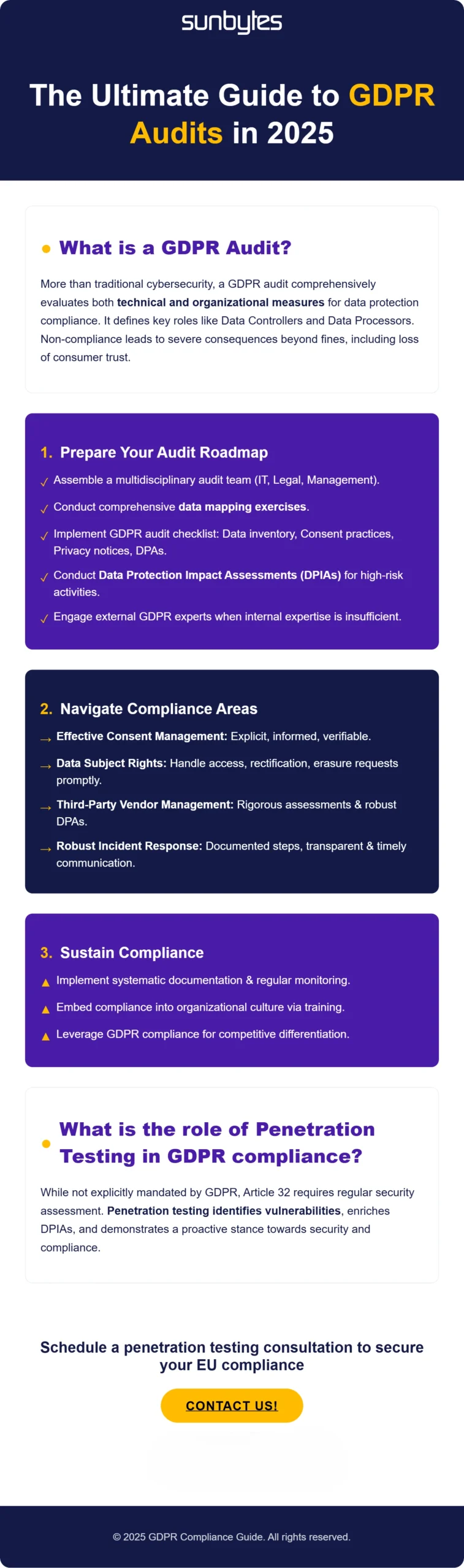
A GDPR audit is distinct from standard cybersecurity audits in scope and purpose. While traditional cybersecurity audits focus primarily on technical vulnerabilities, GDPR audits comprehensively evaluate both technical and organizational measures for data protection compliance.
Under GDPR, two key roles are defined clearly: Data Controllers (entities determining the purpose of data collection) and Data Processors (entities processing data on behalf of controllers). Non-compliance can lead to severe consequences beyond fines, notably loss of consumer trust and brand integrity.
How to Prepare Your GDPR Audit Roadmap
Effective compliance begins by assembling a multidisciplinary audit team comprising IT specialists, legal advisors, and management executives. Initially, businesses must conduct comprehensive data mapping exercises, clearly identifying what data is collected, processed, and stored.
A streamlined GDPR audit checklist should include:
- Data inventory and mapping documentation
- Consent acquisition practices evaluation
- Clarity and thoroughness of privacy notices
- Data processing agreements (DPAs) aligned with GDPR Article 28
When dealing with high-risk data processing activities, organizations are legally obligated to conduct Data Protection Impact Assessments (DPIAs). The Irish Data Protection Commission’s guide provides clear thresholds for when DPIAs are mandatory, recommending systematic identification and assessment of risks, followed by targeted mitigation strategies.
Engaging external GDPR audit experts is advisable when:
- Internal expertise is insufficient
- Complex data processing activities require specialized scrutiny
- Independent validation of compliance efforts is beneficial
Read guide on the Top 10 Cybersecurity Rules for Your Business in 2025 provides insights to support your GDPR audit preparation.
Navigating GDPR Compliance Areas
Here are some key focused areas when it comes to GDPR compliance:
- Effective consent management is an important component of GDPR compliance. According to the European Data Protection Board (EDPB), consent must be explicit, informed, and verifiable. Businesses must maintain meticulous records of consent collection and continuously review consent procedures to meet evolving regulatory standards.
- GDPR mandates precise management of data subject rights, including requests for access, rectification, and data erasure. Organizations benefit from automation and specialized response teams to promptly and efficiently handle these requests.
- Third-party vendor management is equally critical. Companies must ensure contractual compliance through rigorous vendor assessments and legally robust Data Processing Agreements (DPAs), clearly outlining data protection obligations.
- A robust incident response protocol significantly mitigates data breach impacts. Companies must document actionable steps, emphasizing transparent and timely communications with affected parties and regulatory authorities.
Sustaining Compliance is Beyond the Initial Audit
Post-audit compliance hinges on systematic documentation and regular monitoring. Structured record-keeping ensures transparency and facilitates regulatory inspections. Furthermore, embedding compliance into organizational culture via regular training sessions and periodic review cycles is integral to sustaining long-term compliance.
Strategically, businesses can leverage their GDPR compliance to differentiate themselves competitively, highlighting trustworthiness and security as key market advantages in communications and marketing strategies.
Strengthening your GDPR Compliance with Penetration Testing
Although GDPR does not explicitly mandate penetration testing, Article 32 requires businesses to assess security effectiveness regularly. Penetration testing meets this requirement practically by identifying vulnerabilities that could otherwise lead to compliance breaches or data exposure.
Penetration tests notably enrich DPIAs, providing critical insights for comprehensive risk assessment and vulnerability remediation strategies. Documented penetration tests showcase a proactive stance toward security and compliance.
Read “The Complete Guide to Penetration Testing for Businesses” to understand how comprehensive security testing is aligned with GDPR compliance.
Elevating Your Compliance with Sunbytes’ Penetration Testing
Partnering with us for penetration testing provides an immediate advantage:
- Certified experts deliver comprehensive, tailored assessments.
- Actionable insights to quickly address security vulnerabilities.
- Enhanced documentation demonstrating proactive compliance efforts, directly supporting audit requirements.
Act now to fortify your data protection strategies. Contact Sunbytes today to schedule your comprehensive penetration testing and solidify your organization’s commitment to robust GDPR compliance.
Frequently Asked Questions
- Data inventory and classificationrn
- Consent management verificationrn
- Review of Data Processing Agreements (DPAs)
- Security measures evaluationrn
- Data Subject Rights proceduresrn
- Breach notification protocolsrn
- DPIA (Data Protection Impact Assessment) documentation