Top Mobile App Development Companies are not automatically the right companies for your product. A Dutch SME building a regulated healthcare app, a B2B SaaS platform, a media app, or an internal field-service tool will need different strengths from a development partner.
This shortlist gives you a practical way to compare mobile app development companies in the Netherlands. The goal is not to crown one universal winner. The goal is to reduce a long list of vendors into a shortlist you can verify with the same questions, the same scope, and the same delivery expectations.
If your project is still at the idea, backlog, or rough-scope stage, start by clarifying the mobile app development process from brief to launch before you ask vendors for proposals.
TL;DR
- A top mobile app development company in the Netherlands is a vendor that can prove fit for a specific app type. For this article, “top” means the company has visible mobile app capability, Netherlands or EU market relevance, delivery depth beyond interface design, and enough public evidence for buyers.
Key takeaways:
- Use directory rankings and company websites to build the first shortlist, not the final decision.
- Match each company to your project type: MVP, native consumer app, enterprise app, regulated app, product redesign, or long-term platform build.
- Ask the same verification questions before you compare price. A cheaper quote with missing QA, support, or architecture ownership is not cheaper after launch.
- Best fit when: your team already has a product idea, budget range, or internal business case and needs to compare delivery partners.
- Watch out for: proposals that describe the app screens but do not explain backend ownership, testing, release control, data protection, or maintenance.
How the list of mobile app development companies was selected
This list is based on public company information, visible service focus, Netherlands presence, directory visibility, and fit for Dutch or EU business buyers. It is not a paid ranking and it is not a substitute for procurement due diligence.
The selection criteria:
- The company has a Netherlands presence or clearly serves Dutch and EU clients.
- Mobile app development is visible in its public service offering.
- The company shows delivery capability beyond interface design or marketing.
- The company can support iOS, Android, cross-platform, or web/mobile product teams.
- The company has a plausible fit for B2B, SaaS, e-commerce, healthcare, media, education, mobility, or enterprise use cases.
- The company gives buyers enough signals to verify fit: case studies, reviews, minimum project size, team size, technology stack, process, security posture, or support model.
Directory data changes often. Before contacting any company on this list, verify current reviews, service focus, team size, minimum budget, and office location through the company website and third-party directories.
For a deeper selection framework, use a mobile app development company in Europe checklist before you send an RFP.
Top mobile app development companies in the Netherlands
The numbers below are for navigation, not a best-to-worst ranking. Sunbytes is placed first because this is a Sunbytes article and the section explains where Sunbytes fits. The rest of the list should still be checked against your project type, budget, delivery model, and support needs.
1. Sunbytes
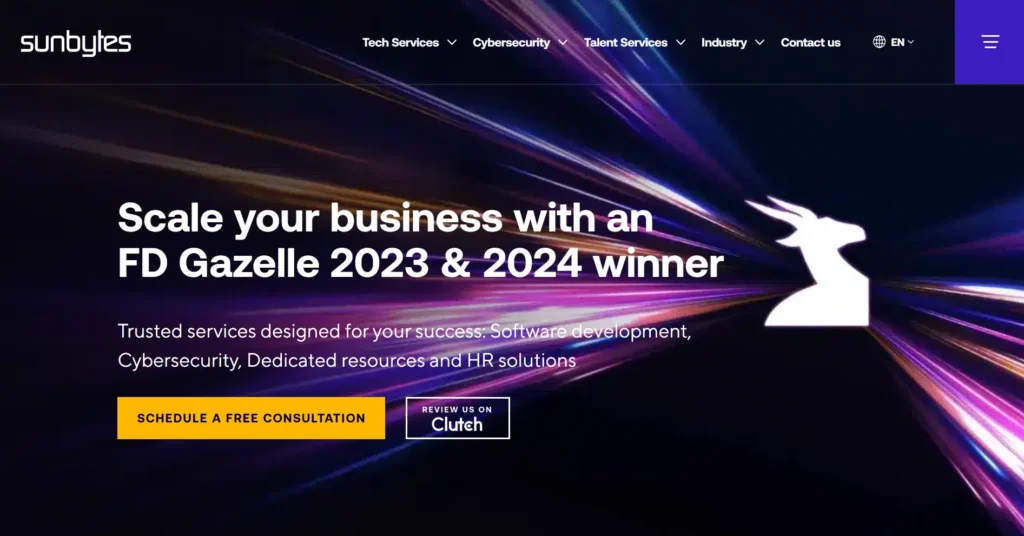
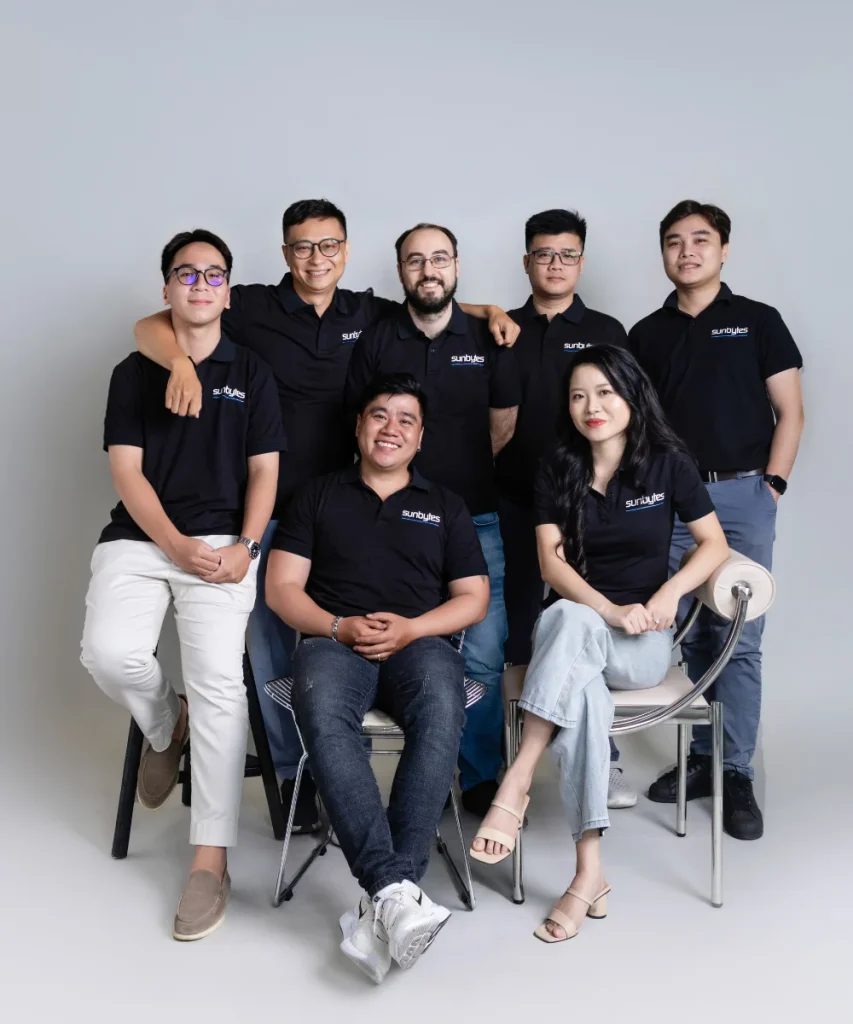
Sunbytes is a Dutch technology company with headquarters in the Netherlands and a delivery hub in Vietnam. For mobile and custom software projects, Sunbytes fits teams that need senior engineering capacity, structured delivery, QA/testing, maintenance and support, and security-aware implementation without building every role in-house.
The stronger fit is a company that needs to turn a product idea, backlog, or internal workflow into a buildable delivery plan, then execute it with a controlled engineering team. That can include mobile apps, web apps, backend systems, integrations, QA, and long-term support.
This setup is most relevant when the buyer wants Dutch-led communication with flexible delivery capacity from Vietnam. It can work for SMEs and scale-ups that need more than a one-off app build: architecture discipline, sprint delivery, testing, maintenance, and the option to scale the team as the product grows. Dedicated senior teams are typically operational within 2-4 weeks, which matters when the product roadmap is already approved but local hiring cannot keep pace.
If the app handles personal data, customer accounts, payments, or operational workflows, GDPR mobile app compliance should be part of vendor evaluation before development starts.
2. Pinch
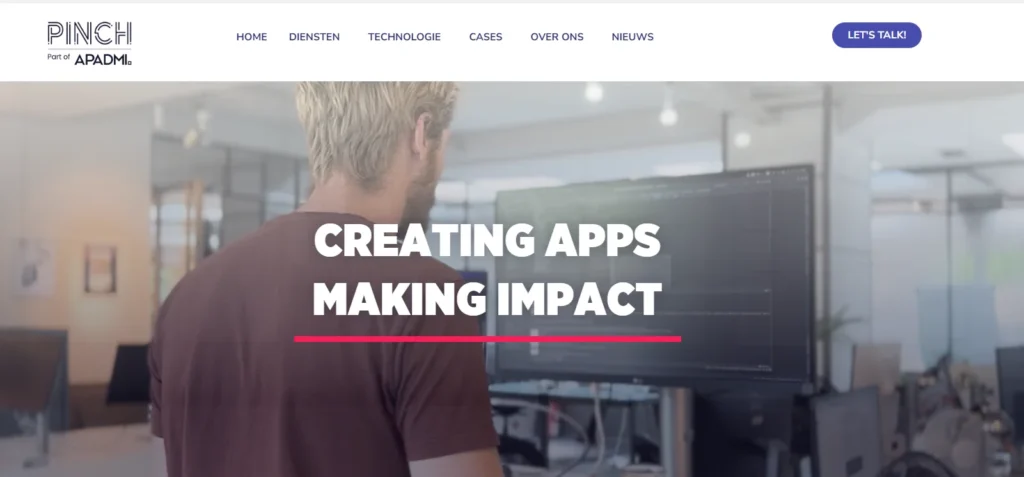
Pinch is an Amsterdam-based mobile app company focused on app strategy, design, and development. Its public materials describe work across iOS, Android, Flutter, tablets, wearables, media, mobility, and travel.
Pinch may fit projects where native mobile experience matters. This can include consumer apps, media apps, mobility products, travel products, or apps where device-specific quality is central to adoption.
Before choosing a native-first partner, check whether native development is necessary for your product. If your app mainly supports business workflows, account access, forms, dashboards, or lightweight customer interaction, a cross-platform approach may give you a faster first release.
For a more detailed platform decision, compare React Native, Flutter, and native before committing to the first technical recommendation.
3. Yummygum
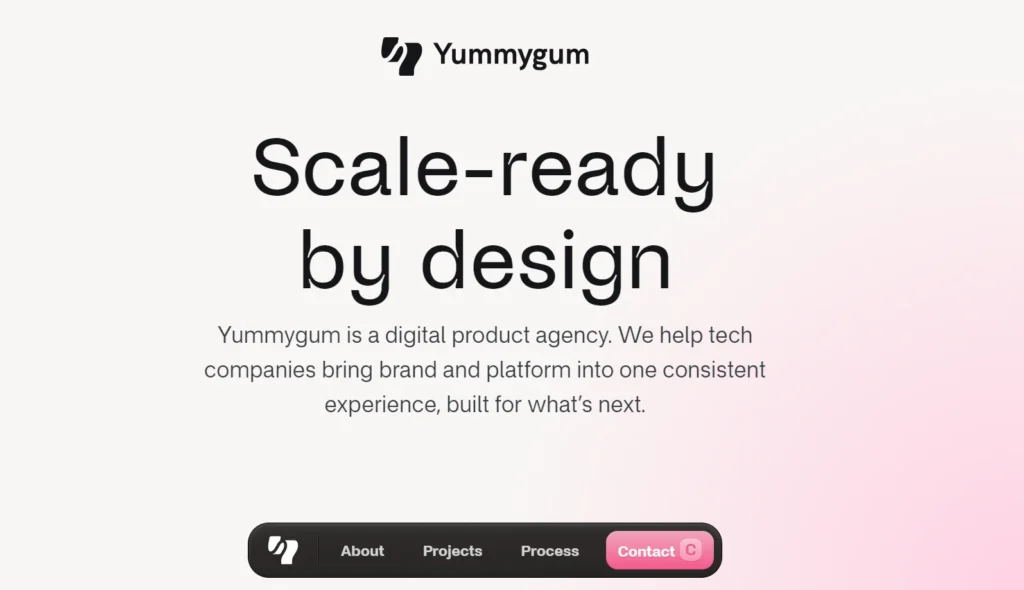
Yummygum is an Amsterdam digital product agency focused on brand, platform, design, and development for tech companies and scale-ups. Its public positioning is closer to product experience and design systems than traditional app outsourcing.
Yummygum may fit scale-ups that already have a platform but need to improve product experience, brand consistency, user flows, or interface quality across web and mobile surfaces. It is a stronger fit when the app is part of a product experience problem, not only a delivery capacity problem.
Before shortlisting Yummygum, clarify whether your main risk is product adoption or engineering execution. If the issue is unclear onboarding, weak UX, or inconsistent product interface, a product agency can be the right category. If the issue is backend complexity, delivery capacity, data security, or long-term engineering support, compare Yummygum against more engineering-heavy vendors.
4. Supercharge
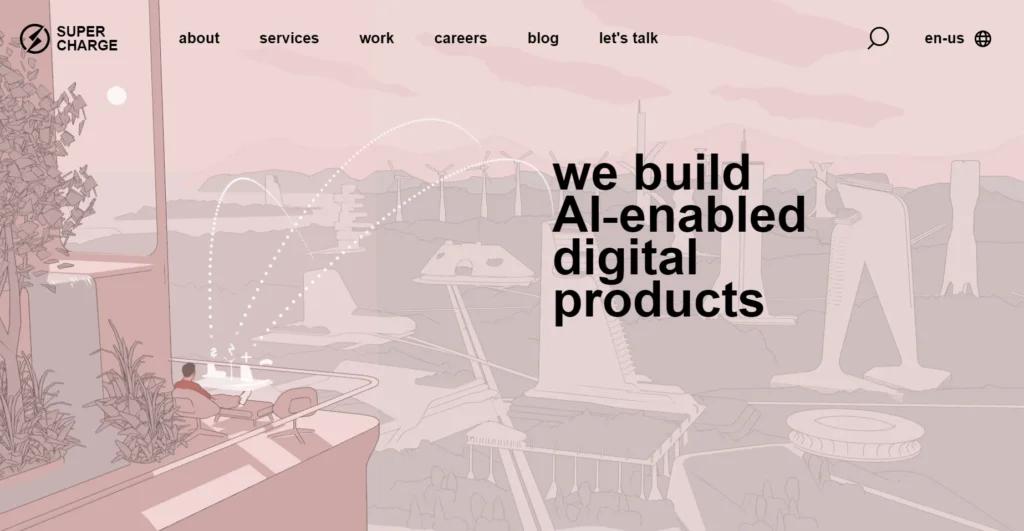
Supercharge is a product engineering and software development company with public positioning around mobile apps, product design, and custom software engineering. It is visible in Amsterdam app development directories and may fit buyers looking for a larger product engineering partner with mobile experience.
Supercharge may be relevant for digital products, apps, and more complex software builds where the mobile app is one part of a larger platform. This can include projects where the team needs product, design, engineering, and delivery structure in one engagement.
Before contacting Supercharge, verify the actual Netherlands delivery setup, team allocation model, and whether the mobile app team is local, nearshore, offshore, or blended. That affects communication rhythm, sprint ownership, cost, and escalation paths.
5. DTT
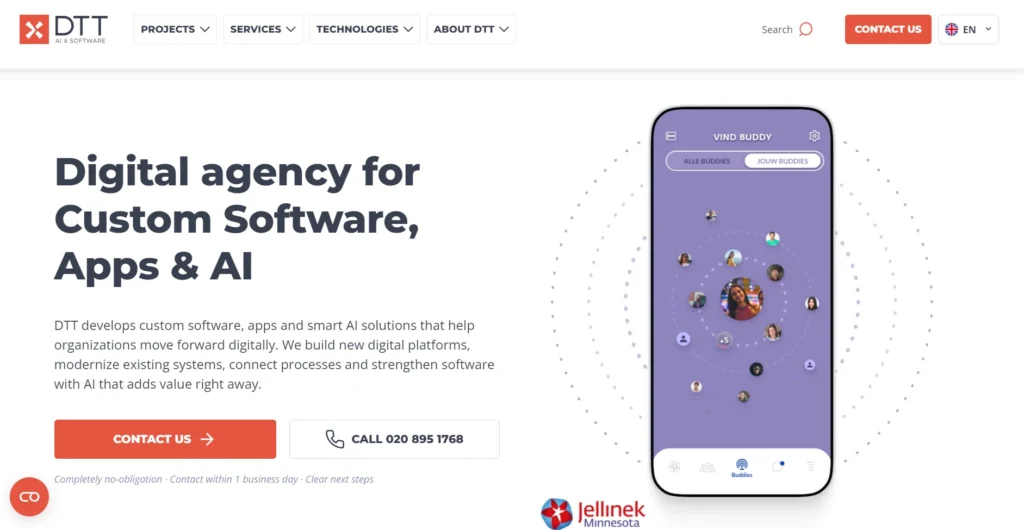
DTT is an Amsterdam digital agency that develops custom software, apps, web platforms, games, and AI applications. Its public app development service covers iOS, Android, web apps, and hybrid applications, which makes it one of the more app-specific companies on this list.
DTT may fit organisations that want a Dutch app partner with visible experience across public sector, healthcare, NGOs, corporates, start-ups, investors, and SMEs. It is a practical candidate when the buyer wants a company that can handle app design and development under one roof.
The main verification point is product depth. Ask how DTT handles backend architecture, integrations, QA, app store release, maintenance, analytics, and security. A mobile interface is only one part of the product. The data model, API structure, access control, and support model usually decide whether the app holds up after launch.
6. Moqod
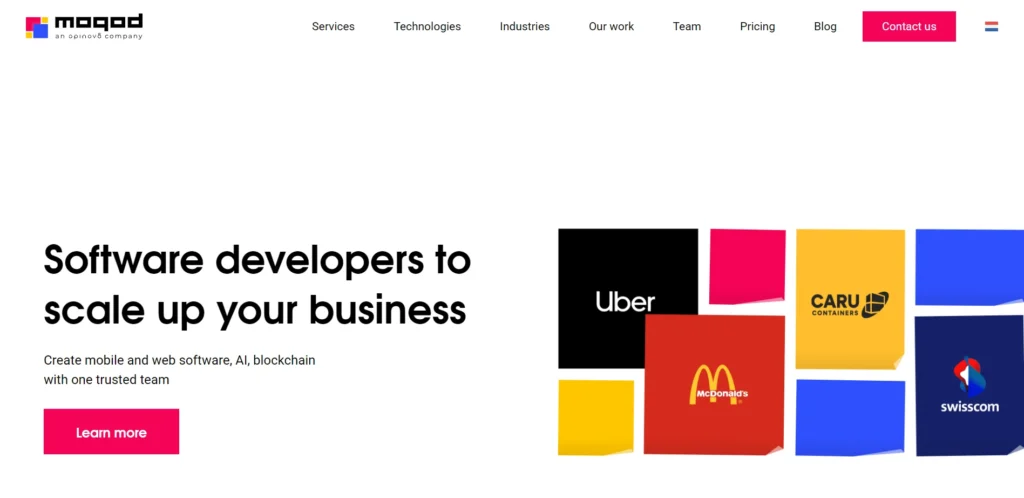
Moqod is a software development company with public positioning around mobile, web, long-term collaboration, and nearshoring. Its service pages mention mobile delivery for iOS, Android, Flutter, and PWA, alongside web technologies such as Python, PHP, frontend, and .NET.
Moqod may fit companies that need a software partner for mobile and web delivery, especially when the relationship is expected to continue beyond the first release. The nearshoring angle can also fit buyers that want more engineering capacity but still need a structured collaboration model.
Before choosing Moqod, verify how the team will be set up for your project. Ask who owns product management, architecture, QA, and communication. Long-term collaboration only works when the operating model is clear from sprint one.
If your app is part of a broader outsourcing decision, compare delivery model, cost, quality controls, GDPR setup, and communication rules before you commit.
7. Q42
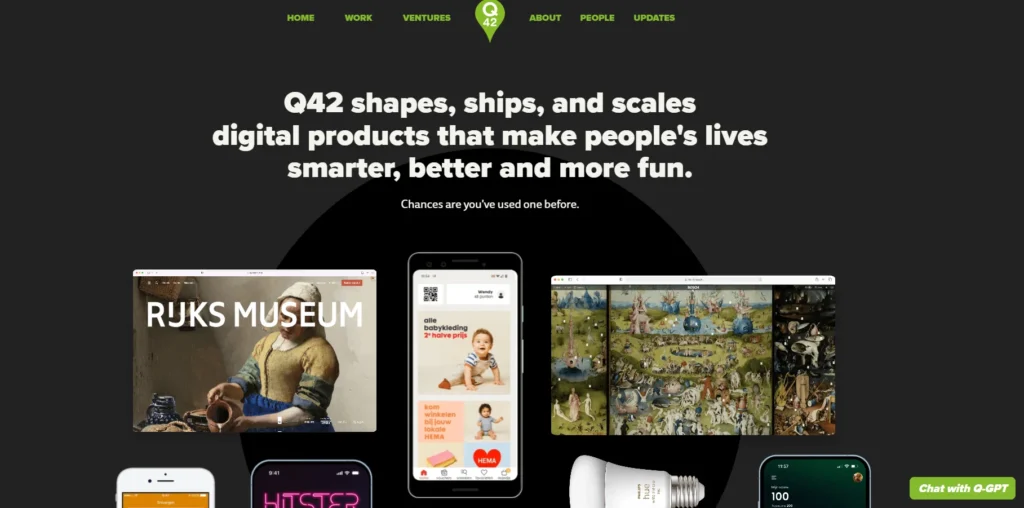
Q42 is a Dutch digital product studio that builds apps, websites, connected devices, AI applications, and digital products. Its public work includes iOS and Android apps built with native development and cross-platform frameworks such as React Native.
Q42 may fit companies building consumer-facing products, connected experiences, media apps, retail apps, or high-traffic digital products where product quality and engineering craft both matter. It is a stronger fit when the app needs to feel polished and work reliably at scale.
Before contacting Q42, clarify whether you need a product studio or a delivery capacity partner. Product studios can be strong when discovery, experience design, and craft are central to the outcome. If your main constraint is adding senior engineering capacity to an existing roadmap, compare Q42 against dedicated team and custom software delivery models.
How to compare these mobile app development companies in the Netherlands by project type
A vendor shortlist only becomes useful when it is matched to project type. A polished consumer app, a regulated enterprise app, and an internal operations app do not fail for the same reason.
Use this comparison table before you request proposals.
| Project need | What to look for | Strong fit signals | Risk signal |
|---|---|---|---|
| MVP or early-stage product | Discovery, lean delivery, scope control | Prototype, fast feedback loop, clear backlog, fixed sprint rhythm | Vendor sells a full build before validating the scope |
| Native consumer app | iOS/Android depth, UX quality, release experience | Native app portfolio, strong design process, app store release support | Cross-platform recommendation without checking device-specific needs |
| Cross-platform business app | React Native or Flutter trade-off | Vendor explains why the stack fits your team, budget, and roadmap | One stack recommended for every project |
| Enterprise mobile app | Architecture, QA, integrations, maintenance | API ownership, CI/CD, documentation, release process, support model | No clear testing, handover, or post-launch ownership |
| Regulated or data-heavy app | Security and privacy discipline | GDPR awareness, access control, audit trail, secure storage, testing before launch | Compliance treated as a legal-only issue |
| Product experience redesign | UX research, design systems, product analytics | Clear user journey work, component system, measurable adoption goals | Interface refresh without product behaviour metrics |
| Long-term product roadmap | Team continuity and delivery governance | Sprint cadence, roadmap planning, maintenance model, named roles | Build-only mindset with weak support after launch |
A strong proposal should show how the company will reduce the two delivery risks that most often create rework: vague architecture ownership and weak post-launch control. Rework typically adds 30-40% to the original estimate when product scope, technical decisions, and acceptance criteria are not clear early enough. Post-launch instability usually starts when QA, monitoring, support, and app store update ownership were treated as optional.
If your product is likely to grow beyond an MVP, review mobile app architecture best practices before you accept a proposal.
If you need to justify investment internally, compare the proposal against mobile app development ROI rather than the initial build price only.
If launch quality matters, mobile app security testing before launch should be part of the vendor discussion, not a separate task added in the last sprint.
Shortlisting vendors is easier when the scope is specific. If you already have a product idea, backlog, or internal workflow, Sunbytes can help turn it into a buildable plan covering architecture, delivery roles, QA, release control, and post-launch support. Discuss your app scope with Sunbytes
Questions to ask before you contact a mobile app development company
Ask the same questions to every company on your shortlist. That makes proposals easier to compare and reduces the chance that one vendor looks cheaper only because key work is excluded.
- Have you built mobile apps for our industry or a similar workflow?
- Which platform approach would you recommend for this use case: native, React Native, Flutter, or PWA?
- How do you handle discovery before development starts?
- Who owns architecture decisions and how are those decisions documented?
- What does your QA and testing process look like before release?
- How do you handle GDPR, user data, access control, and third-party SDKs?
- What does the team look like: seniority, roles, time zone overlap, and communication rhythm?
- What happens after launch: bug fixing, maintenance, roadmap support, and app store updates?
- What is excluded from the proposal?
- Can you show comparable work or references?
The best answers are specific. “We follow agile” is not specific. A stronger answer explains sprint length, who attends planning, how acceptance criteria are written, how bugs are triaged, how releases are approved, and what happens when scope changes.
Before signing, use these questions to ask before signing with an app development agency to pressure-test scope, ownership, IP, support, and contract terms.
Where Sunbytes fits in this shortlist
Sunbytes fits when a mobile app is part of a broader custom software build. That often means the app needs backend logic, integrations, QA, maintenance, and security-aware delivery rather than only interface design.
Sunbytes is a Dutch technology company headquartered in the Netherlands, with a delivery hub in Vietnam. For 15 years, we have helped clients turn product strategy into reliable delivery, especially when the mobile app is part of a broader software environment: backend systems, integrations, customer accounts, internal workflows, or long-term product roadmaps.
This is where our three service pillars support mobile app delivery. Through Digital Transformation Solutions, Sunbytes helps build and modernise digital products with senior engineering teams covering custom development, QA/testing, maintenance, and support. Through CyberSecurity Solutions, we help reduce risk when the app handles personal data, payments, accounts, or sensitive business workflows. Through Accelerate Workforce Solutions, we help companies scale capacity when the roadmap grows faster than internal hiring can support.
For Dutch and EU companies comparing mobile app development partners, Sunbytes is strongest when the project needs more than a one-off app build. We help make the scope buildable, put the right team around it, and keep delivery controlled from first sprint to post-launch support.
Need a Dutch-led team to build or modernise a mobile app? Talk to Sunbytes about your custom software development plan.